How to Set Up a Meditation Altar (Ideas for Any Space)
A meditation altar is a small, intentional place for objects that help you begin and return to practice. It can be spiritual, secular, traditional, or entirely personal. You do not need a separate room or an elaborate collection—only a stable surface, a few meaningful items, and enough open space to sit comfortably.
What is a meditation altar?
A meditation altar is a visual and practical focal point for meditation, prayer, reflection, or another quiet daily ritual. It might hold a candle, a photograph, flowers, a bell, a religious image, or simply an empty bowl. The objects are not decorations chosen to impress a visitor; they are reminders of why you sit down.
The word altar carries specific meanings within many religious traditions. If your practice belongs to one of those traditions, its teachings should guide the arrangement. A personal meditation space outside a formal tradition can be simpler and more flexible, but it should not borrow sacred objects merely for appearance.
An altar is also not a requirement for meditation. A comfortable place to sit and a few uninterrupted minutes are enough. The surface is useful only when it helps make practice easier to begin.
Where should you place a meditation altar?
Choose the quietest repeatable place in your home, not necessarily the most picturesque one. A bedroom corner, the end of a bookcase, a space beside a window, or a low-traffic part of the living room can all work. Privacy, comfortable temperature, and freedom from interruption matter more than a perfect view.
Leave enough room to approach the altar and sit without twisting around other furniture. If you use a rocking meditation chair, allow space for the legs to move gently. Keep cords, curtains, blankets, and walking paths clear—especially if the setup includes a candle or incense.
If the room serves several purposes, use a rug, lamp, or low table to give the practice area a quiet boundary. Our guide to creating a meditation space at home has more ideas for working with a shared room.
How do you choose a meditation altar table?
The best altar table is stable, proportionate to your seated position, and large enough for the few items you actually use. A low table keeps the arrangement within sight while you sit on the floor or in a meditation chair. A taller shelf may be more practical if you sit in a standard chair.
| Consideration | What to look for |
|---|---|
| Height | Visible from your seat without forcing your neck upward |
| Surface area | Enough room for essentials with clear space around them |
| Stability | A level, steady base that will not rock when touched |
| Material | A surface that is easy to care for and comfortable to live with |
| Flexibility | Easy to move or reconfigure if the room has several uses |
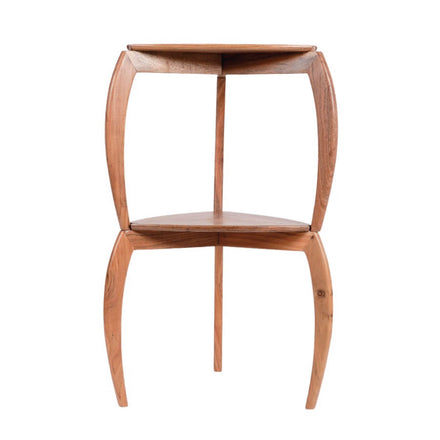
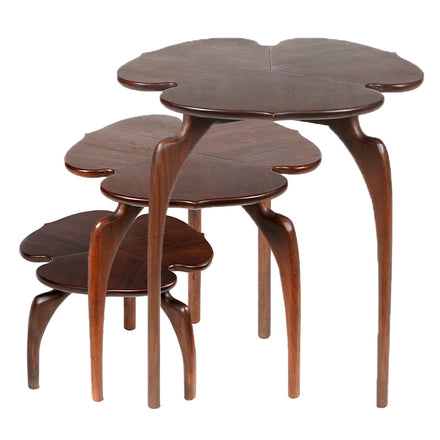
A conventional side table, bench, shelf, or sturdy wooden box may be enough. HoM’s solid Acacia low tables are designed for flexible use near a meditation seat. The Asset side table and stool stacks into a taller form, while the Nestack tables can separate into several surfaces or nest into one compact footprint.
Choose furniture because its size and function suit the room, not because an altar needs to look a particular way. A simple surface you already own is better than a special piece that makes the practice feel staged or burdensome.
What should you put on a meditation altar?
Begin with one object that brings your attention back to the purpose of practice. Add only what has a clear role. The following are possibilities, not a checklist:
- A candle or small lamp to mark the beginning of quiet time.
- Flowers, a leaf, stone, or branch as a simple connection to the natural world.
- A photograph or written name that recalls a person, place, or commitment.
- A bell or singing bowl if sound is already part of your practice.
- A text, journal, or prayer book used before or after sitting.
- An image or sacred object that belongs meaningfully to your tradition.
- An empty bowl as a reminder of openness, simplicity, or receiving.
There is no need to display everything meaningful to you at once. One photograph can hold more attention than a crowded row of objects. A clear area on the table also gives you a practical place to set down a book, tea, or meditation timer.
How do you set up a meditation altar safely?
- Start with a stable surface. Check that the table sits level and cannot be bumped easily from a doorway or walking path.
- Keep heat away from wood and fabric. Place candles and incense in heatproof holders, away from curtains, cushions, plants, and wall hangings.
- Provide ventilation. Smoke and fragrance can be irritating even when an incense product is natural. Use less, open a window, or skip it entirely.
- Never leave flame unattended. Extinguish candles and incense before leaving the room. A flameless candle is a sensible alternative around children, pets, or shared housing.
- Protect the tabletop. Use a coaster, tray, or saucer beneath water, flowers, oils, and hot vessels. Wipe spills promptly.
Solid wood is durable, but it is not waterproof or heatproof. The guide to Acacia wood and furniture care explains how moisture, sunlight, and finish affect an oil-finished surface.
What are good meditation altar ideas for a small space?
Use a corner that can return to ordinary life
Place one small table beside a chair or cushion and keep the arrangement limited to a lamp and one meaningful object. The corner remains useful for reading or tea when you are not meditating.
Build upward instead of outward
A narrow shelf or a table designed to stack can create two or three levels without taking more floor space. Keep heavier objects low and avoid creating a top-heavy arrangement.
Keep the practice in a tray
Gather a candle, photograph, and small bowl on one tray. The whole setup can move to a table for practice and return to a cabinet afterward. This works well in a studio apartment or shared room.
Use nesting tables only when needed
A nested set can remain compact most of the day. Pull out one smaller table for a journal, tea, or flowers during practice, then slide it back beneath the others. See eight ways to use nesting tables for more flexible arrangements.
Let a wall do part of the work
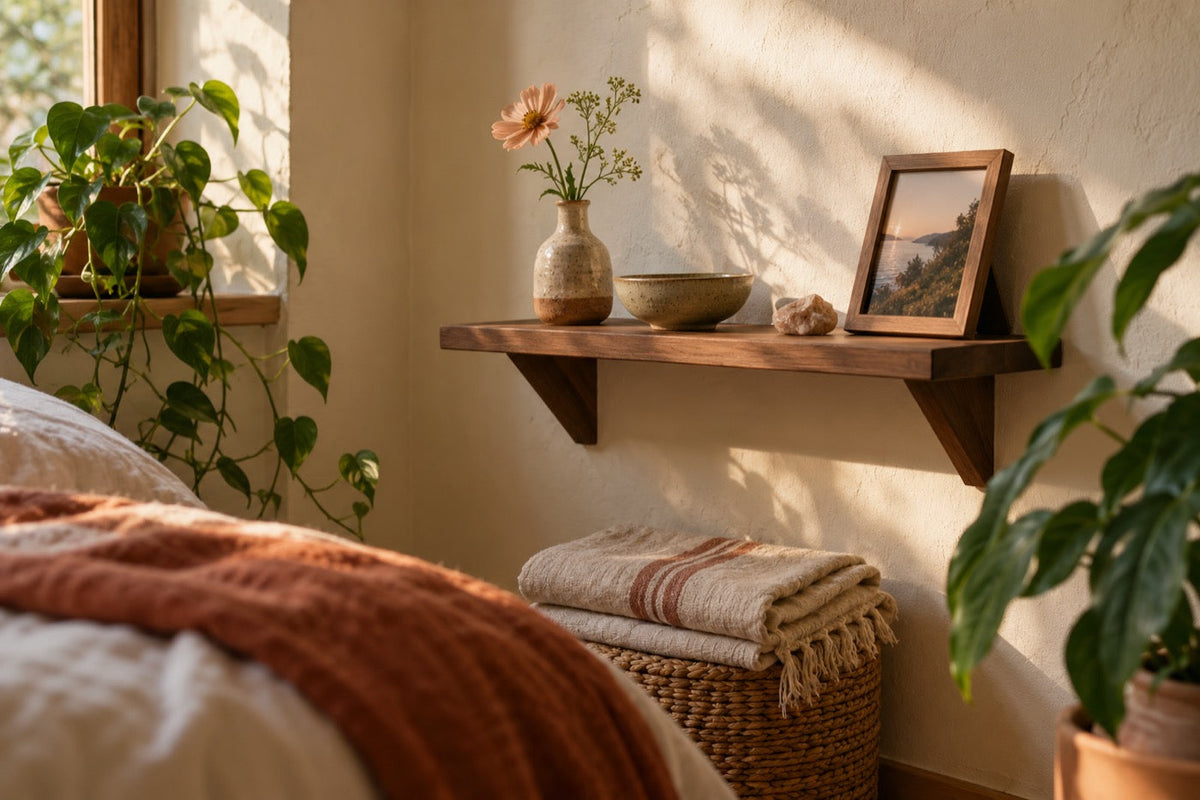
A single framed image or small wall shelf can hold the visual focus while the floor stays open. Secure anything mounted above the sitting area and avoid placing heavy objects where they could fall.
How do you keep a meditation altar simple?
Remove anything that does not support practice or require your care. Dust, water flowers, replace candles, and put books back regularly. If maintaining the altar becomes another unfinished task, reduce it to the one or two objects that still matter.
It can also change with the seasons or with your practice. Rotate an object rather than adding another. Put away items connected to a period of life that has passed. Simplicity does not mean the altar must be bare; it means every visible object has room and a reason to be there.
The most useful altar is the one you can approach without hesitation. It should make sitting down feel natural, not create another standard you have to meet.
Frequently asked questions
Does a meditation altar have to be religious?
No. It can support a religious practice, but it can also be a personal focal point for secular meditation, journaling, remembrance, or quiet reflection. Use objects that honestly belong to your own practice.
Which direction should a meditation altar face?
There is no universal direction for every meditation altar. Some traditions have specific guidance, which practitioners should follow. Otherwise, orient the table for privacy, comfortable light, and an uncluttered place to sit.
Can a meditation altar be in a bedroom?
Yes. A bedroom can offer privacy and a reliable routine. Keep the altar clear of busy storage, laundry, and the immediate walking path so it remains easy and safe to approach.
How high should a meditation altar be?
Choose a height that keeps the focal point comfortably visible from your usual seat. A low table works well with floor seating; a shelf or standard side table may suit a dining-height chair.
How many items should be on a meditation altar?
There is no required number. Start with one meaningful object and add only what serves a clear purpose. Leaving open space often makes the objects you keep more noticeable.
Explore HoM meditation chairs for comfortable, elevated cross-legged seating.