What Is Acacia Wood? Hardness, Durability and Care
Acacia wood is the timber of a large group of fast-growing trees and shrubs, many native to Australia and nearby regions. In furniture, “Acacia” often refers to plantation-grown species such as Acacia mangium. It is valued for warm grain, practical strength, and suitability for solid-wood construction—but its exact color, density, and durability vary by species.
What is Acacia wood?
Acacia is not one single kind of lumber. It is the name of a botanical genus with more than a thousand accepted species, according to the Royal Botanic Gardens, Kew. That matters because two pieces sold as “Acacia” can differ in color, grain, density, and movement.
In today’s furniture trade, the name often describes wood from plantation-grown Australian species, especially Acacia mangium and close relatives. Kew notes that Acacia mangium is used for furniture, cabinetry, light structural work, tools, boxes, and other solid-wood products.
Sources: Kew’s Acacia genus record and Kew’s overview of Acacia mangium.
Is Acacia a hardwood?
Yes. Acacia comes from flowering trees, so botanically it is a hardwood. The name “hardwood” describes the kind of tree, not a guaranteed level of hardness. The U.S. Forest Products Laboratory explains that some hardwoods are comparatively soft and some softwoods are comparatively hard.
That is why a single hardness number cannot describe every piece of Acacia furniture. Species, growing conditions, moisture content, board selection, grain direction, and construction all influence how the finished piece performs. When shopping, solid construction and thoughtful joinery are more useful signals than a broad species label alone.
Source: USDA Forest Products Laboratory, Wood Handbook.
Is Acacia wood good for furniture?
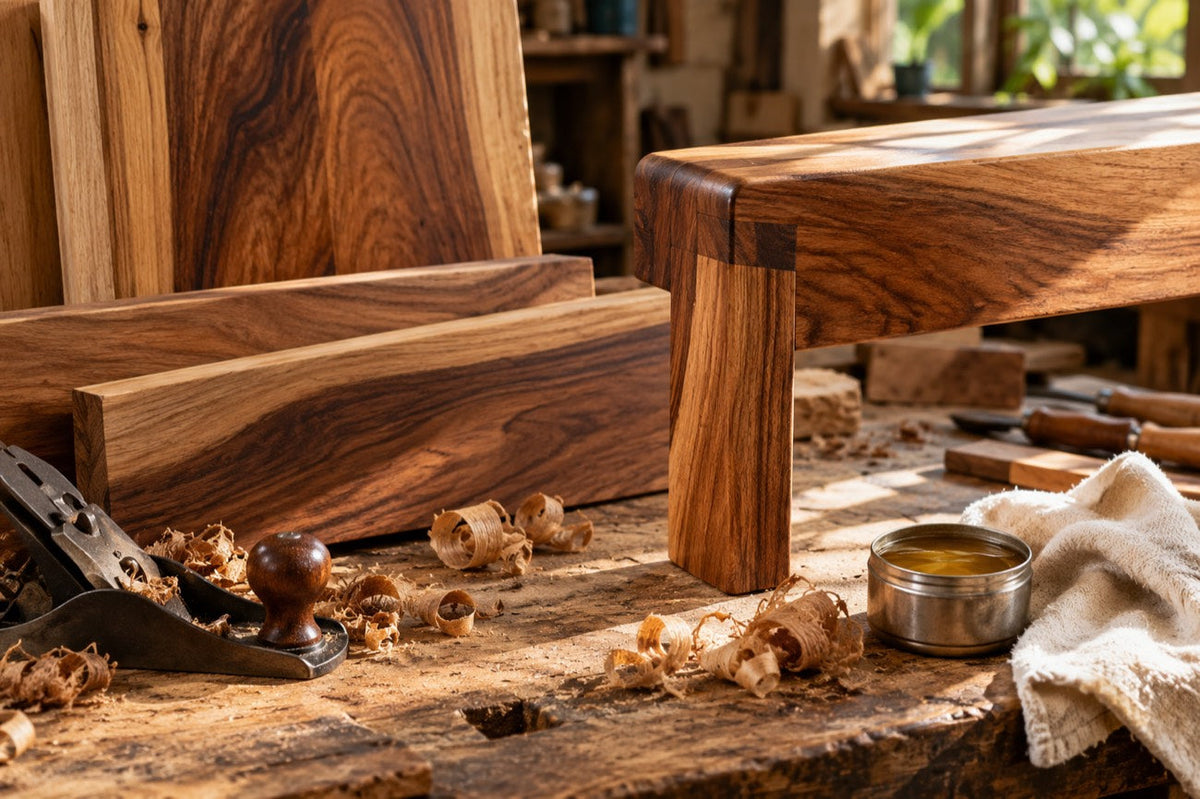
Acacia can be an excellent furniture wood. It is widely used for solid pieces, and its flowing grain takes on warm brown, amber, and reddish tones under oil. The natural variation means a chair or table can feel individual without relying on applied patterns or heavy ornament.
Good furniture still depends on more than the species. The boards need to be properly dried, oriented, joined, shaped, and finished. Wood naturally exchanges moisture with the surrounding air, so careful construction must allow for small seasonal changes rather than pretending the material will never move.
| Acacia trait | What it means in furniture |
|---|---|
| Natural grain variation | Every seat and table has its own lines, color shifts, and small character marks |
| Solid-wood workability | The wood can be shaped into curved seats, legs, edges, and traditional joints |
| Practical strength | Suitable species and well-selected boards can serve everyday furniture well |
| Moisture response | Like all solid wood, it benefits from a stable indoor environment and prompt spill cleanup |
HoM uses solid Acacia across both our meditation chairs and low tables. The material lets the sculpted shapes remain visually light while still feeling grounded and substantial in the room.
Is Acacia wood waterproof?
No natural wood should be treated as waterproof. A finish can slow the movement of moisture and help protect the surface from everyday spills, but it does not turn a solid-wood table into plastic. Water left standing can mark the finish, raise the grain, or move into joints and end grain.
The Forest Products Laboratory describes moisture-related movement as one of wood’s important performance characteristics. The practical answer is simple: use coasters, wipe spills promptly, avoid soaking the surface, and do not leave indoor furniture exposed to rain or extreme humidity changes.
Source: USDA Forest Products Laboratory research on wood movement and moisture.
How do you care for Acacia furniture?
- Dust with a soft, dry cloth. Regular dusting keeps grit from being rubbed across the finish.
- Wipe spills promptly. Use a lightly damp cloth when needed, then dry the surface rather than leaving water behind.
- Avoid harsh cleaners. Strong solvents, abrasives, and silicone-heavy polishes can change or cloud an oil finish.
- Protect it from extremes. Keep the piece away from standing water, heating vents, and long periods of intense direct sun.
- Refresh the finish thoughtfully. If the surface begins to look dry, use a compatible furniture oil and follow the maker’s directions. Test an inconspicuous area first.
Small changes in tone are part of living with real wood. An oil-finished surface may deepen with use and light, and an occasional mark can often be blended into the finish rather than hidden beneath an opaque coating.
Why does HoM build with Acacia?
We choose Acacia because it suits the way I design: sculptural curves, slim profiles, visible joinery, and furniture meant to be touched every day. Its grain brings movement to a quiet shape, while the warm tone sits naturally beside wool, linen, plants, books, and the other ordinary objects of a home practice.
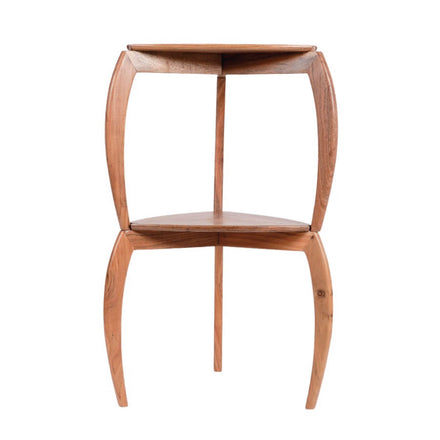
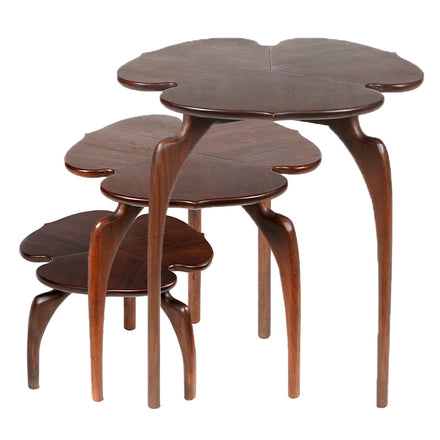
It also works across the HoM family. The same material language connects a rocking meditation seat to an Asset side table and stool or a set of Nestack Acacia nesting tables. The pieces do not have to match exactly; the shared wood makes them feel related.
Plantation growing can make Acacia a practical furniture resource, but responsible sourcing still matters. “Acacia” alone is not a sustainability certification. Buyers should look for clear sourcing information and furniture made to remain useful long enough to justify the material and labor that went into it.
Frequently asked questions
Is Acacia wood the same as teak?
No. Acacia and teak come from different botanical groups. They can both be used for furniture, but their grain, color, properties, sourcing, and care are not interchangeable.
Does Acacia furniture scratch?
Any finished wood surface can scratch. Use felt pads under objects that move, lift rather than drag accessories, and keep grit off the surface. An oil finish is often easier to refresh locally than a thick film finish.
Can Acacia furniture be used outside?
Some Acacia products are built and finished for outdoor use, but indoor furniture should not be assumed to be weatherproof. Follow the maker’s intended-use and care instructions for the specific piece.
Why does Acacia wood vary so much in color?
Acacia covers many species, and natural boards also vary within a single tree. Heartwood and sapwood, grain direction, mineral streaks, finishing, and light exposure can all affect appearance.
Is Acacia wood difficult to maintain?
No. For indoor oil-finished furniture, routine care is usually simple: dust gently, wipe spills promptly, avoid soaking, and refresh the compatible oil finish only when the surface needs it.
Explore HoM meditation chairs for comfortable, elevated cross-legged seating.