
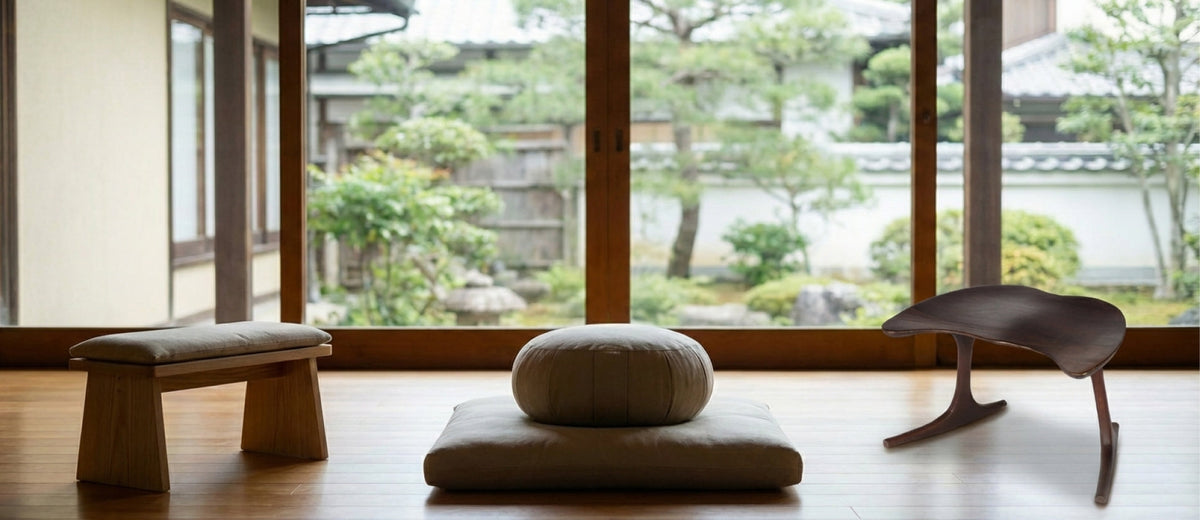
Meditation Chair vs. Bench vs. Cushion: How to Choose the Right Seat

Walk into the world of meditation seating and you'll meet a small crowd of options: cushions, benches, stools, chairs, seats. The names overlap, the shapes vary, and it isn't always obvious which one suits your body or your practice. The good news is that the differences are real and easy to understand once you know what each is designed to do.
Here's a clear guide to the main types of meditation seating, who each one suits, and how to find the seat that lets you sit comfortably, day after day.
The meditation cushion (zafu)
The cushion is where most people begin. A traditional zafu is a firm, round cushion that sits on the floor and lifts the hips slightly above the knees.
Best for: Flexible bodies, newer practitioners testing the waters, and anyone who values simplicity and portability.
The trade-off: A cushion relies entirely on your own flexibility. It offers no structure of its own, so open hips and supple knees do all the work. For longer sits, or for bodies that have lost some flexibility, a cushion can create pressure points and leave you shifting around rather than settling in.
The meditation bench (seiza bench)
A kneeling bench supports the seiza posture — kneeling with your shins tucked beneath a small angled bench, so you're not sitting directly on your heels.
Best for: People who find kneeling comfortable and want to take weight off their ankles.
The trade-off: While a bench relieves the ankles, it shifts load onto the knees. For some that's perfectly comfortable; for others — particularly those with sensitive knees — it trades one pressure point for another. The fixed kneeling position also suits fewer body types than a more open posture.
The meditation stool
A stool is closely related to the bench — a small, often portable seat that raises you off the floor into a kneeling or perched position. The terms "bench" and "stool" are frequently used interchangeably.
Best for: Practitioners who want a light, simple lift off the floor and prefer a kneeling-style posture.
The trade-off: Like the bench, it tends to favor one fixed posture, and stability varies widely depending on construction.
The meditation chair
A meditation chair brings together the grounded feeling of floor seating with real structure and support. By elevating and gently angling the hips, it opens the hip joint, lets the spine stack naturally, and removes the strain of folding the body down to floor level — all while keeping you close to the earth rather than perched up in a conventional chair.
Best for: Daily practitioners, anyone who sits for longer sessions, bodies that appreciate more support, and people who want a single seat that adapts to cross-legged sitting comfortably.
The trade-off: A well-made meditation chair is a considered purchase rather than a quick accessory — but it's also the option you're least likely to outgrow.

"Seat," "chair," "stool" — why the names blur
You'll notice these words get used loosely, and the same product might be called a chair by one maker and a seat or stool by another. Don't get too caught up in the vocabulary. What actually matters is three things: how high it lifts your hips, what posture it supports (cross-legged, kneeling, or both), and how stable and comfortable it is over a real session, not just the first minute.
How to choose: a few honest questions
Rather than starting with the product, start with your body and your practice:
How flexible are your hips and knees? Very flexible bodies can do well on a simple cushion. Stiffer hips and sensitive knees are far happier with the elevation and structure of a chair.
How long do you sit? Short sessions are forgiving. The longer you sit, the more a supportive, stable seat earns its place.
Cross-legged or kneeling? If kneeling feels good to you, a bench or stool may suit. If you prefer an open, cross-legged posture — or want flexibility between the two — a chair is the more adaptable choice.
Will it live in your space? A seat that has to be stored away tends to be forgotten. Seating you're happy to keep in view is seating you'll actually use.
Finding the right seat at HoM
At HoM Furnishings, our meditation chairs are handcrafted from durable Acacia hardwood and designed over years of testing to combine grounded floor seating with the support a daily practice deserves. Within the collection, you'll find seats suited to different bodies and spaces:
- The Bodhi — our elevated, ergonomically angled seat, designed to make cross-legged sitting genuinely comfortable.
- The Chairish — a sturdy, stackable seat built for versatile, multi-use spaces.
- The Epiphany — hand-woven elegance that blends artistry with everyday function.
- The Self Shelf — a portable, low-rise seat with folding legs for practice anywhere.
The right seat isn't about the name on the label — it's about the one that lets you settle in, sit with ease, and return to your practice day after day. Explore the collection and find yours.