What Are Nesting Tables? 8 Ways to Use and Style Them
Nesting tables are a set of graduated tables designed to slide neatly beneath one another. They give you several useful surfaces without asking for several tables’ worth of floor space. Pull them apart when you need a drink table, plant stand, or serving surface, then tuck them together again.
What are nesting tables?
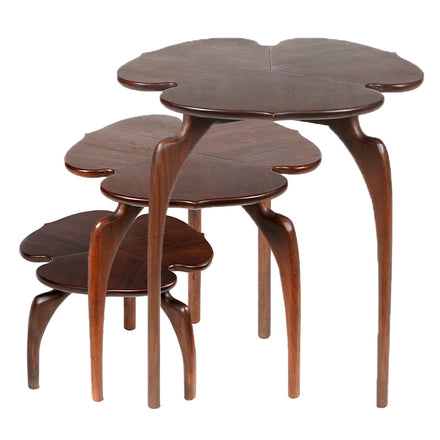
Nesting tables are usually sold as two or three tables in related shapes and progressively smaller sizes. The smallest fits beneath the middle table, and both fit beneath the largest. When nested, the group has roughly the footprint of one side table. When separated, each piece works on its own.
That simple arrangement is what makes them useful in living rooms, bedrooms, studios, and other spaces where the furniture needs to adapt. One table can stay beside a chair while the others wait underneath. When company arrives, all three can move where they are needed.
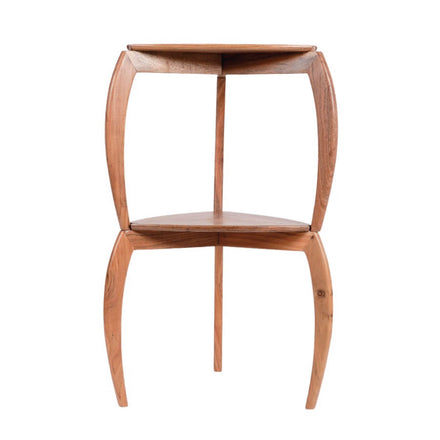
The HoM Nestack, for example, is a set of three solid Acacia tables. The graduated pieces nest into a compact group, spread through a room as side tables, or arrange together as a tiered display.
What is the difference between nesting and stacking tables?
Nesting tables slide beneath one another while remaining upright. Stacking tables are made to sit directly on top of one another. Some designs can do both, but the words describe different ways of storing or arranging the pieces.
| Feature | Nesting tables | Stacking tables |
|---|---|---|
| How they store | Smaller tables slide beneath larger ones | Each piece sits directly on the one below |
| Shape | Usually graduated in height and width | Often identical or designed to lock together |
| Best known for | Extra surfaces with a small everyday footprint | Compact vertical storage or a taller combined form |
| HoM example | Nestack | Asset side table and stool |
The distinction matters when you shop. If you want several tables that disappear into the footprint of one, look for a nesting set. If you want pieces that build upward into shelving or store in a vertical pile, look for a design specifically made to stack.
What are 8 useful ways to use nesting tables?
- Keep one beside a sofa. Leave the largest table where you normally set a drink, book, or lamp. The smaller tables stay within reach until someone needs an extra surface.
- Make a flexible coffee-table group. Arrange two or three pieces in front of the sofa instead of committing to one large coffee table. Separate them for easier access, then nest them to open the center of the room.
- Serve guests without crowding the room. Move a table beside each chair for cups and small plates. Afterward, bring the set back together rather than leaving extra furniture around the room.
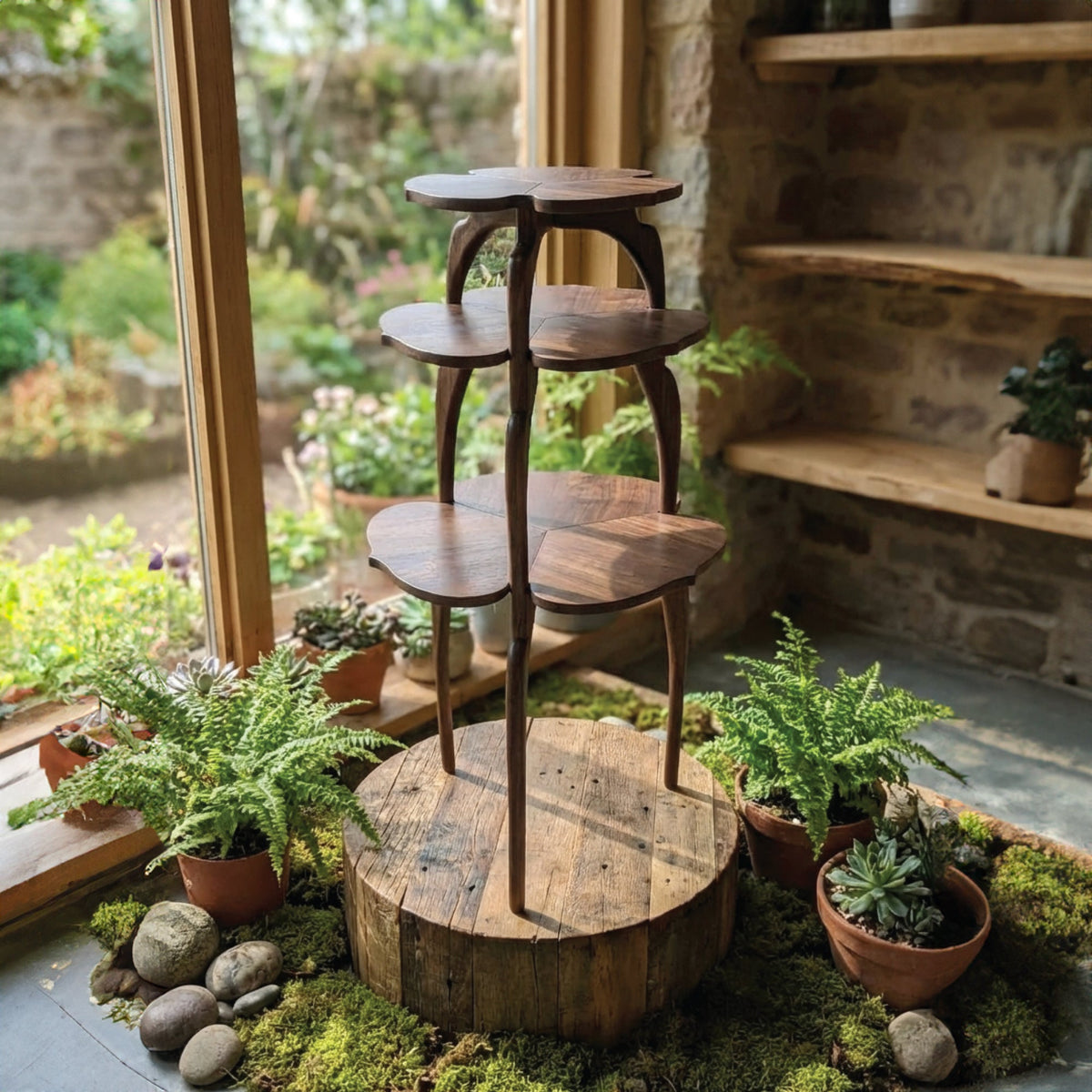
- Create a tiered plant display. Stagger the tables so each plant receives light and remains visible. Use saucers and wipe moisture promptly to protect a natural wood finish.
- Use them as compact bedside tables. In a guest room, the largest table can hold a lamp while a smaller one pulls out for a phone, glasses, or morning tea.
- Support a reading or meditation corner. Place one low table beside a favorite chair or rocking meditation seat for a book, journal, candle, or cup of tea.
- Arrange a simple meditation altar. A low surface can hold a few meaningful objects without becoming a permanent installation. A second table gives you room for incense or flowers while keeping open flame safely separated.
- Turn the set into a changing display. Group books, ceramics, and plants at different heights, then revise the arrangement as the room changes. If your tables are also designed to stack, they may form a compact open shelf.
The best arrangement is often the one that changes during the day. A nested set can be quiet and compact in the morning, spread out for visitors in the afternoon, and return to a single footprint at night.
How do you style nesting tables without making them look cluttered?
Start with one clear purpose for each visible surface. A lamp and a book may be enough beside the sofa. A plant and a small bowl can anchor a tiered display. Leaving part of the tabletop empty helps the group read as furniture rather than storage.
Vary height, not every other detail. Objects in similar materials or colors feel connected even when the tables are separated. Natural wood works easily with wool, linen, clay, metal, plants, and well-used books. If the tables have expressive grain, give that pattern room to show.
When all the tables are nested, align them cleanly or offset them deliberately. A slight reveal of each lower edge makes the set’s construction visible. A random half-pulled position can simply look unfinished.
What should you look for when buying nesting tables?
- Useful dimensions: Check the height of your sofa or chair and confirm that the largest table will be comfortable to reach.
- A manageable nested footprint: Measure the intended spot with the whole set tucked together, not only the smallest piece.
- Enough clearance: The tables should slide together without scraping their legs or tops.
- Stable construction: Each table should stand securely on its own, since the set will spend plenty of time apart.
- A repairable finish: A natural oil finish can often be refreshed as the wood ages, rather than discarded when everyday marks appear.
- Honest intended use: Do not sit or stand on a table unless the maker explicitly designed it to serve as a stool.
Material matters, but construction matters just as much. Solid wood brings natural variation and can age gracefully when it is well joined and maintained. Our guide to Acacia wood, durability, and care explains why species, finish, and everyday treatment all influence performance.
Why choose solid wood nesting tables?
Solid wood gives a small table visual warmth and enough substance to feel settled in the room. It also makes each surface individual: grain lines, color shifts, and small character marks will vary rather than repeat like a printed pattern.
HoM’s nesting and low side tables are designed in Ashland, Oregon, and handcrafted in solid Acacia. Nestack uses three graduated tables and a teak oil finish, so the pieces feel related whether they are nested together or placed around the room.
Frequently asked questions
Do nesting tables save space?
Yes. Their main advantage is that two or three tables can occupy approximately the footprint of the largest one when they are not in use. You still need enough clearance to pull the smaller pieces out comfortably.
Can nesting tables be used separately?
Yes. Each table should function as an independent surface. That is what makes a nesting set useful for guests, reading corners, bedrooms, or rooms that change throughout the day.
Can nesting tables be used as stools?
Only if the maker says the piece is designed and tested for sitting. A table may look sturdy but still have joinery or proportions intended only for objects. HoM’s Asset is specifically designed as both a stackable side table and stool.
Where should nesting tables go in a living room?
A common place is beside a sofa or armchair, where the largest table remains useful every day. They can also replace a single coffee table, sit beneath a console, or move around the room when guests need extra surfaces.
How do you protect wooden nesting tables?
Use coasters and plant saucers, lift rather than drag objects, dust with a soft cloth, and wipe spills promptly. Follow the maker’s care directions before applying cleaners or furniture oil.
Explore HoM meditation chairs for comfortable, elevated cross-legged seating.