Knee or Hip Pain When Sitting Cross-Legged? Why It Happens and What Helps
Knee or hip pain while sitting cross-legged usually means the position asks for more hip rotation, knee bend, or sustained pressure than feels comfortable for your body. Do not force it. Raising your hips, supporting the knees, loosening the leg position, and moving sooner may help—but persistent or severe pain deserves professional assessment.
Why can your knees hurt when you sit cross-legged?
Cross-legged sitting places the knees in deep flexion while the hips move outward and rotate. In one study of healthy adults, knee flexion in the position ranged from 126 to 142 degrees. That number is not a target. It simply shows that the posture asks for a substantial amount of motion throughout the lower body.
The knee may become the place where you feel tension even when limited hip movement is part of the setup. If the thigh does not comfortably lower toward the floor, pressing the knee down does not create more hip mobility; it adds force to a bent joint. A knee that remains high is not a posture failure. It is information about the range available today.
Knee pain also has many possible causes that cannot be identified from a sitting position alone. Pain at the front, side, back, or inside of the knee may have different explanations. Swelling, locking, giving way, recent injury, or recurring pain should not be treated as a flexibility problem.
Source: study of lower-limb joint ranges in cross-legged sitting.
Why can your hips hurt when you sit cross-legged?
A cross-legged seat asks the hips to flex, move away from the midline, and rotate outward. A three-dimensional study of common sitting positions found that cross-legged sitting used the greatest hip abduction and external rotation among the positions measured. The amount varied widely between participants, which helps explain why the same shape can feel natural to one person and restrictive to another.
Where you feel discomfort matters, but it does not provide a diagnosis by itself. Some people notice a stretch through the inner thigh or buttock. Others feel pinching in the front of the hip, pressure at the outside of the hip, or an ache after standing up. Pain can also be referred from the lower back or another area.
Do not use body weight, your hands, or another person to push the knees lower. A comfortable range can change with time, injury, surgery, arthritis, and ordinary differences in anatomy. The goal is a steady position you can leave easily, not the widest possible opening at the hips.
Sources: three-dimensional analysis of hip motion in common sitting positions and the NHS overview of hip pain in adults.
What simple adjustments may make cross-legged sitting easier?
Change the setup before asking your body to change. The most useful adjustment is often more height beneath the pelvis. Raising the hips can reduce how far the hips and knees need to fold and gives the thighs more room to angle downward.
- Raise your hips. Try a firm cushion, folded blanket, low meditation seat, or standard chair. Add height until the pelvis feels supported and the knees can rest without being pushed.
- Support each knee separately. Place a folded blanket or firm cushion beneath a knee that hangs in the air. The support should meet the leg; it should not press the leg upward.
- Use a loose cross. Let the feet sit farther from the pelvis. Lotus and half-lotus are not requirements for meditation, and a simple crossed-shin position is often easier to leave.
- Switch which shin is in front. Alternating sides changes the repeated pattern. If one arrangement consistently hurts, do not force symmetry—choose another position.
- Move before pain builds. Uncross the legs, stand, or change seats. Shorter comfortable periods are more useful than enduring a posture after it becomes painful or numb.
| What you notice | A setup change to try | When to stop |
|---|---|---|
| Knees stay well above the hips | Raise the seat and support beneath each knee | Stop if there is joint pain or pressure |
| Pinching at the front of a hip | Loosen the cross, add height, or use a chair | Stop rather than trying to push through the pinch |
| Leg or foot becomes numb | Uncross immediately and change position | Seek advice if numbness persists or keeps returning |
| Lower back rounds and tires | Raise the hips and shorten the sitting period | Choose back support if discomfort continues |
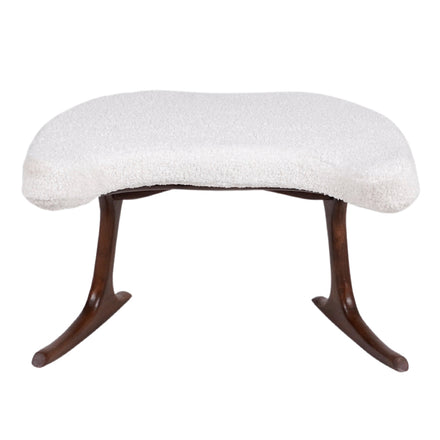
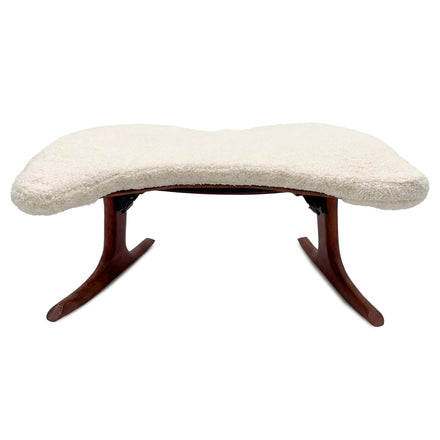
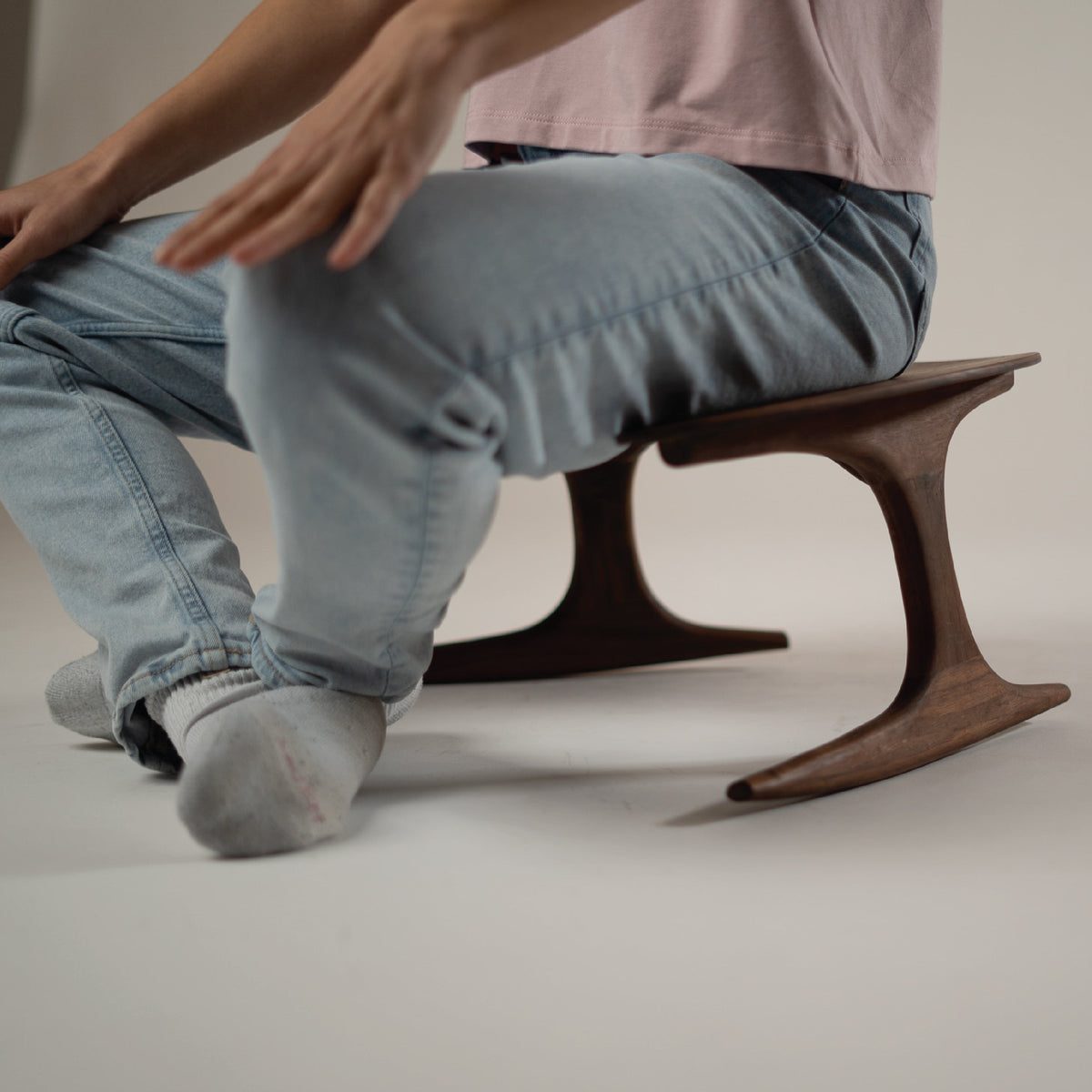
For a wider overview of the posture, read Is Sitting Cross-Legged Bad for You? HoM meditation chairs lift the pelvis above the floor and use rocking legs that follow small, natural shifts in position. They are comfort-focused furniture, not medical devices, and they are not a substitute for care when pain needs evaluation.
Can changing seat height reduce knee or hip strain?
More height changes the geometry of the entire position. When the pelvis sits higher, the hips and knees do not need to fold as deeply to reach a crossed-leg shape. The thighs may slope downward rather than pulling the knees upward, and the pelvis may feel less inclined to roll backward.
Start higher than you think you need, then reduce support only if the position remains easy. A firm surface is usually more predictable than a very soft cushion that compresses until the hips are nearly back at floor level.
The Bodhi meditation chair creates a 12-inch seat intended for a permanent place at home. The folding Self Shelf provides a 9-inch portable seat. A standard chair is also a completely valid option, especially when placing both feet on the floor feels better.
What stretches should you discuss with a physical therapist?
There is no single stretch that is right for every knee or hip problem. A physical therapist can assess whether mobility, strength, load, a previous injury, or another factor is relevant and choose movements that fit the person rather than the search term.
Depending on the assessment, a therapist may discuss gentle work for hip rotation, the inner thighs, hip flexors, buttock muscles, or the back of the thigh. They may also emphasize strength, gradual exposure to the position, or avoiding a particular stretch. More flexibility is not always the answer.
If you already have an exercise plan, follow the clinician’s instructions rather than adding a new movement from an article. Stop an exercise that produces sharp pain, worsening symptoms, or joint instability. Cambridge University Hospitals notes that hip stretches should be selected with a physiotherapist and advises seeking help when an exercise is painful.
Source: Cambridge University Hospitals physiotherapy guidance on hip stretches.
When should you see a medical professional?
Arrange an assessment if pain is getting worse, keeps returning, affects sleep or normal activities, or does not improve after you stop the aggravating position. A doctor or physical therapist can help identify what is contributing to the symptoms and advise which positions and exercises are appropriate.
Seek urgent medical guidance for a knee that is badly swollen, has changed shape, locks, gives way, cannot bear weight, or is hot and red with fever or feeling unwell. Severe hip pain after a fall, inability to walk or bear weight, or tingling or loss of feeling after an injury also needs urgent evaluation. Use the urgent-care guidance for your location.
Sources: NHS guidance for knee pain and hip pain in adults.
This article provides general educational information. It cannot diagnose the cause of knee or hip pain and is not a treatment plan.
Frequently asked questions
Should I keep sitting cross-legged if my knee hurts?
No. Leave the position rather than waiting for the pain to become stronger. You can try more seat height, knee support, or a different sitting position later. Recurring pain deserves assessment from a qualified professional.
Why does raising my hips help?
A higher pelvis reduces how far the hips and knees need to bend for the legs to cross. It may also make it easier for the thighs to slope downward and for the spine to rise without strain.
Is numbness normal when sitting cross-legged?
Do not remain in a position once a leg or foot becomes numb. Uncross the legs and move. Seek medical advice if numbness persists, occurs frequently, or accompanies weakness, injury, or other concerning symptoms.
Can I meditate without sitting cross-legged?
Yes. You can meditate in a standard chair, on a bench, lying down when appropriate, or in another supported position. Compare the options in our meditation chair, bench, and cushion guide.
Are HoM meditation chairs designed to treat pain?
No. HoM chairs are designed to provide elevated, comfortable floor seating with gently rocking legs. They are furniture, not medical devices, and no chair can diagnose or treat the cause of knee or hip pain.
Explore HoM meditation chairs for comfortable, elevated cross-legged seating.