Is Sitting Cross-Legged Bad for You? Knees, Hips and Posture
Sitting cross-legged is not automatically bad for you. For many adults, it is simply one of several comfortable ways to sit. Trouble is more likely when the position asks more of your hips or knees than they comfortably allow, or when you stay there too long. Support, seat height, and regular movement matter more than forcing a “perfect” pose.
What happens when you sit cross-legged?
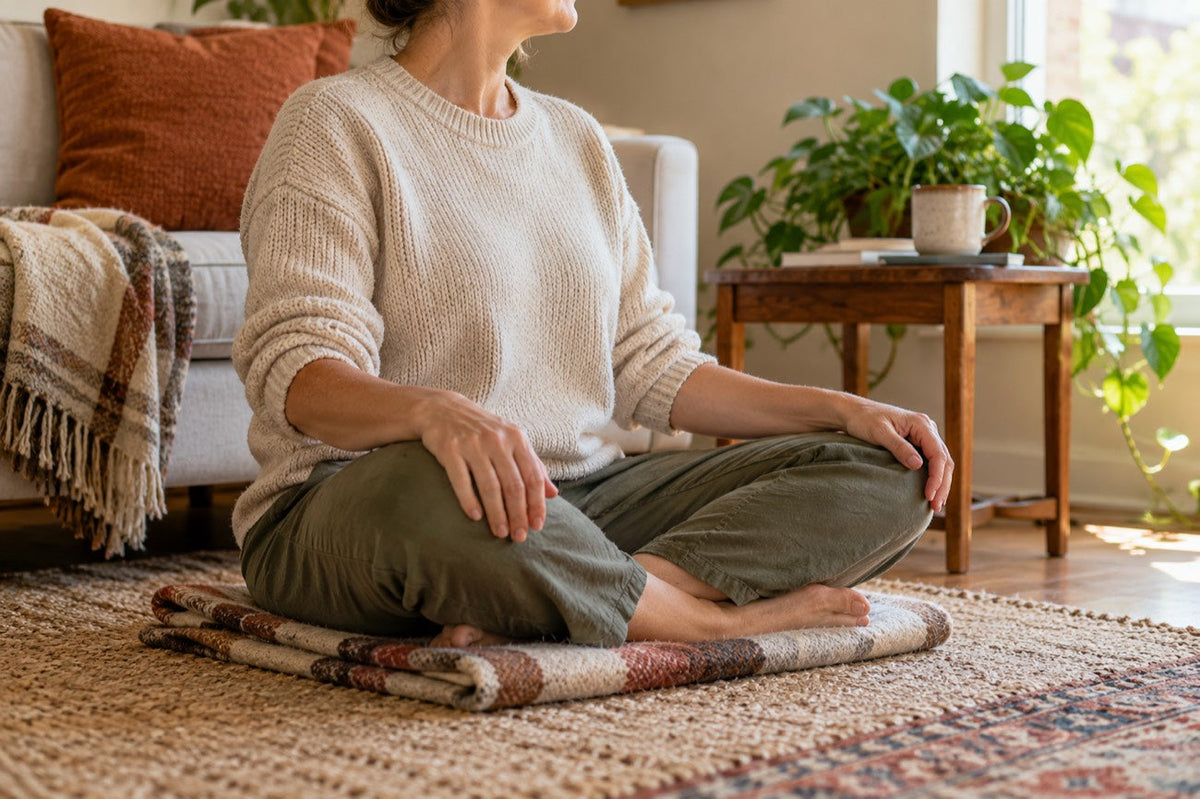
A relaxed cross-legged seat asks the hips to flex, move outward, and rotate. A three-dimensional motion study of common sitting positions found that cross-legged sitting uses substantial hip abduction and external rotation. How easily that happens varies from person to person, which is why one sitter may settle comfortably while another feels strain almost at once.
The pelvis and lower back also respond to the shape of the seat. In a small study of healthy adults, cross-legged sitting produced more backward pelvic tilt and lumbar flexion than erect chair sitting; slouching increased those changes further. The study does not prove that the posture is harmful, but it helps explain why the lower back may round when the hips are low and the knees remain high.
Sources: three-dimensional analysis of common sitting positions and lumbar and pelvic angles in cross-legged sitting.
Is sitting cross-legged bad for your knees?
Not by definition. A comfortable cross-legged position can be a normal part of daily life. The important distinction is between a mild stretch and joint pain. If the knees hover well above the hips, pressing them down or forcing a deeper fold can ask the joints to go farther than they want to go.
Try letting the knees rest where they naturally fall. Place a folded blanket or firm cushion under either knee if it needs support. Change which shin is in front from one sitting session to the next so the body is not always organized in exactly the same way.
Sharp pain, swelling, a sense that the knee may give way, or pain that repeatedly returns is a reason to stop and speak with a doctor or physical therapist. The American Physical Therapy Association’s guide to knee pain advises getting professional guidance when an activity causes knee pain.
How can cross-legged sitting affect your hips and lower back?
When the hips do not comfortably provide the needed range of motion, the pelvis may roll backward and the lower back may round. That does not mean the body has failed or that everyone needs the same posture. It simply means the setup may need to change.
A higher seat can reduce how far the hips and knees must bend. It also gives the thighs room to slope downward instead of holding the knees above the pelvis. Many people find this makes it easier to sit tall without bracing or pulling the shoulders back.
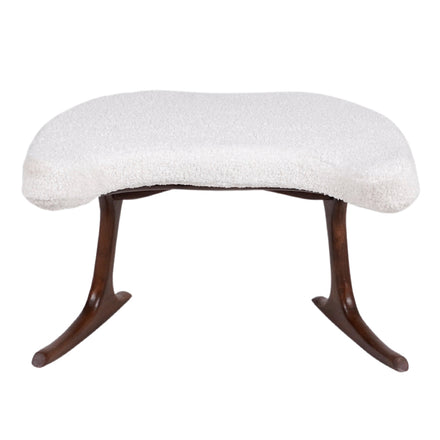
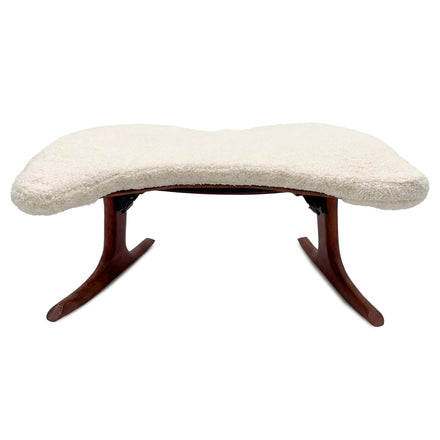
Posture is not a single rigid position to hold forever. A useful seat should make small adjustments easy. HoM meditation chairs raise the body off the floor while keeping you close to the ground, and their rocking legs follow the small shifts that naturally happen during a longer sit.
When can sitting cross-legged feel good?
Cross-legged sitting can create a broad, grounded base while keeping the torso upright and alert. It can also offer a welcome change from a conventional chair. For meditation, reading, tea, or quiet conversation, the position may feel both contained and relaxed when the hips and knees are adequately supported.
The best position is not the one that looks most traditional. It is the one you can inhabit without fighting your body. For a wider look at the mechanics and history of the posture, read Cross-Legged Seating: Why Sitting on the Floor Feels So Good.
How can you make sitting cross-legged easier?
- Raise your hips. Start with a firm cushion, bench, or low seat. Even a modest increase in height can give the knees more room to settle.
- Support the knees. If a knee hangs in the air, place a folded blanket beneath it rather than pushing it toward the floor.
- Choose an easy leg position. A simple loose cross is enough. Lotus and half-lotus are not requirements for meditation.
- Keep the pelvis comfortable. Let the spine rise naturally instead of forcing a military-straight posture.
- Move before discomfort builds. Uncross the legs, stand, or switch positions. Variety is part of a sustainable sitting practice.
| Setup | What it changes | Good to know |
|---|---|---|
| Floor only | Keeps the hips lowest | Works best when the knees can relax without strain |
| Firm cushion | Adds some height and softness | Choose enough firmness that the hips do not sink back down |
| Low meditation chair | Raises the hips while preserving a grounded seat | Useful when you want a stable, repeatable setup |
| Standard chair | Lets both feet rest on the floor | A sound alternative whenever cross-legged sitting is not comfortable |
The sculptural Bodhi meditation chair is designed as a permanent seat for the home. The folding Self Shelf offers a lower, portable setup. Both include gently rocking legs, a defining feature across HoM meditation chairs.
When should you choose another position?
Choose a standard chair, kneeling position, or another supported seat whenever cross-legged sitting creates pain, persistent numbness, or a feeling of instability. You do not need to earn a meditation posture, and changing positions does not make the practice less meaningful.
If discomfort continues after you change the setup, or if you have a recent injury, joint replacement, or a condition that affects mobility, ask a qualified clinician what is appropriate for you. This guide offers general information, not a diagnosis or treatment plan.
Frequently asked questions
Is it bad to sit cross-legged every day?
Not necessarily. Daily cross-legged sitting may be comfortable for some people. Pay attention to pain, numbness, and stiffness, vary your position, and avoid forcing the knees toward the floor.
Why do my knees hurt when I sit cross-legged?
Knee discomfort can have many causes. Sometimes the position asks for more hip or knee motion than is comfortable, especially when the hips are low. Stop if it hurts, try more height and support, and consult a doctor or physical therapist if the pain persists.
Should my knees be lower than my hips?
They do not need to match a precise angle, but many people find it easier to sit upright when the hips are slightly higher than the knees. Support under the seat or knees can help without forcing the body.
Can I meditate in a regular chair instead?
Yes. A regular chair with both feet supported is a completely valid meditation seat. The purpose is a position that supports steady attention, not a particular shape.
What is the best seat for tight hips?
Start higher than you think you need. A firm cushion, meditation bench, low chair, or standard chair can reduce the amount of hip and knee bend. Compare the main options in our meditation chair, bench, and cushion guide.
Explore HoM meditation chairs for comfortable, elevated cross-legged seating.