The Best ADHD Chair for Focus Might Be a Meditation Chair (Here’s Why)
An ADHD-friendly chair is not one specific shape. It is a seat that lets you change position without turning movement into a distraction. For some people that means an adjustable desk chair; for others, a wobble stool, kneeling chair, or low floor seat works better for shorter periods of reading, planning, or focused work.
Adults with ADHD may experience restlessness, fidgeting, and difficulty staying with long tasks. Movement can be useful for some people and distracting for others, so the right seat is the one that gives you options without demanding your attention. A chair is a comfort tool, not an ADHD treatment.
What makes a chair ADHD-friendly?
Start with the task, not the label. A good seat should support what you are doing and make it easy to adjust when your body asks for a change.
- Room to reposition: You can shift, perch, sit cross-legged, or place your feet differently without fighting the chair.
- Movement without drama: Gentle rocking or a small posture change is available, but the seat does not wobble so much that it becomes the activity.
- A stable base: You feel secure when sitting down, changing position, and standing up.
- The right height: Your hips and knees are not forced into a position that becomes uncomfortable quickly.
- Fit for the task: A desk chair may be best for computer work. A floor seat may be better for reading, meditation, conversation, or a short change of position.
The CDC notes that adult hyperactivity can appear as internal restlessness and fidgeting. CHADD likewise recommends treating movement as an individual strategy: something that may help one person stay engaged can distract another.
How do common ADHD chair styles compare?
| Seat type | What it allows | Best suited to | What to consider |
|---|---|---|---|
| Adjustable desk chair | Back support, height adjustment, arm support | Long computer sessions and a standard-height desk | Some models limit cross-legged or tucked-leg positions |
| Wobble stool or balance chair | Continuous movement and frequent weight shifts | People who like active sitting for short tasks | The motion can be distracting or tiring for some people |
| Kneeling chair or seiza bench | A forward hip angle with the shins underneath | People who prefer kneeling | It may not suit sensitive knees, ankles, or limited mobility |
| Low meditation chair | Cross-legged sitting, posture changes, and gentle rocking | Reading, meditation, creative work, and breaks from a desk | It is low to the floor and is not a replacement for every desk setup |
Can movement help with focus?
It can for some people, but the evidence does not support a one-size-fits-all promise. A 2024 study of 70 adults with ADHD found that more fidgeting occurred during correct trials and was associated with steadier response times. The authors described fidgeting as a possible support for sustained attention, not proof that a particular chair improves ADHD symptoms.
CHADD also emphasizes that movement strategies are personal. Quiet, repetitive movement may help someone stay with a task, while motion that is novel, noisy, or visually engaging may pull attention away from it. The practical question is simple: does the movement stay in the background while you keep doing the thing you meant to do?
Read the adult fidgeting study on PubMed | See CHADD's movement and fidgeting strategies
Where does a meditation chair fit?
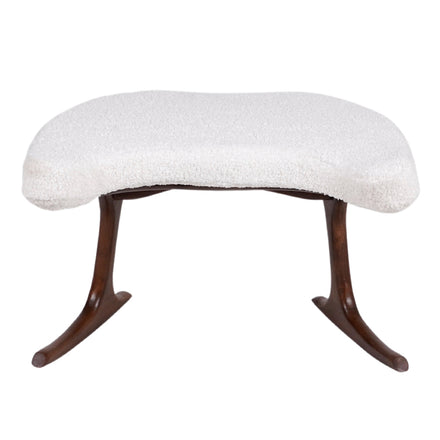
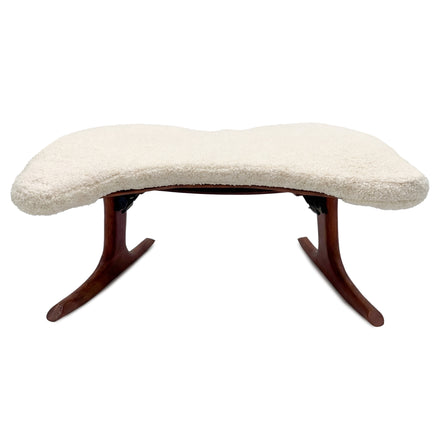
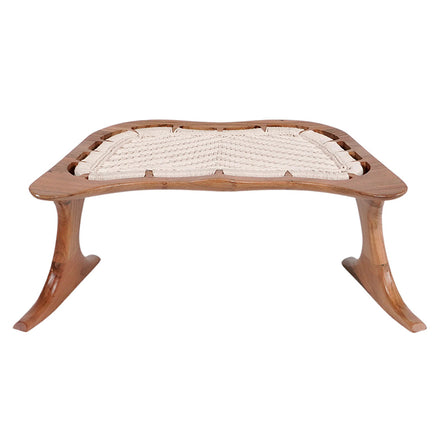
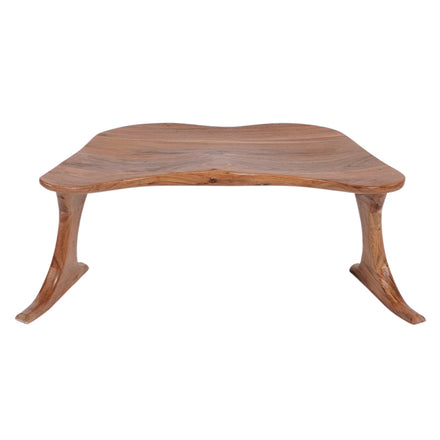
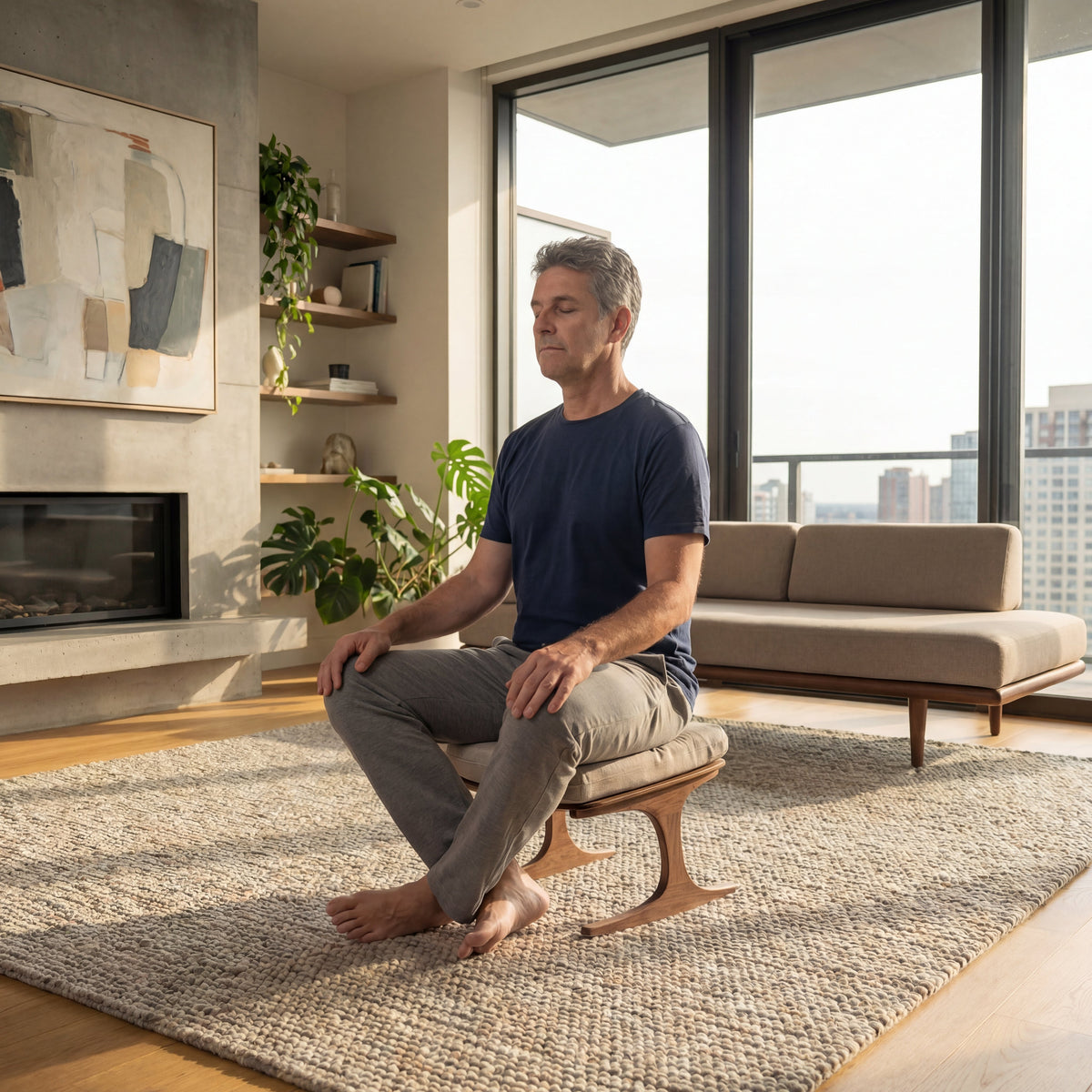
A meditation chair is a low, backless floor seat. It raises your hips above the floor so you can sit cross-legged without asking a flat cushion to provide all the height. HoM chairs also have curved rocking legs, allowing small position changes while the solid Acacia frame remains stable.
That combination can make a meditation chair useful as a secondary focus seat: a place to read, journal, plan, meditate, join a conversation, or work away from a desk for a while. It is not an office chair with lumbar support, and it is not the right choice for someone who has difficulty getting down to or up from the floor without assistance.
If you are comparing options, start with our wooden meditation chairs and choose by height and use:
- Bodhi: a 12-inch seat for a permanent place at home.
- Self Shelf: a 9-inch seat with legs that fold flat for travel and storage.
- Epiphany: an 11-inch chair with a handwoven seat.
- Chairish: an 11-inch stackable chair for studios and shared spaces.
How should you test a focus chair?
- Choose one real task. Try 20 minutes of reading, writing, or planning rather than judging the seat by how it feels for a few seconds.
- Notice what happens to the task. Are you still working while you shift, or has the chair itself become the distraction?
- Check your exit. Make sure you can stand up comfortably and safely, especially from a low floor seat.
- Keep another option nearby. Alternating between a desk chair, standing, and floor sitting is often more useful than expecting one chair to solve every kind of work.
- Ask for professional guidance when needed. If you have pain, a recent injury, balance concerns, or a joint replacement, ask a clinician or physical therapist which seated positions are appropriate for you.
ADHD chair FAQ
What is the best chair for ADHD?
There is no single best ADHD chair. Choose a seat that fits the task, lets you change position, and keeps movement in the background. An adjustable desk chair may be best for long computer sessions; a wobble stool, kneeling chair, or low floor seat may suit shorter tasks or position changes.
Does a rocking chair help ADHD?
Some people find quiet, repetitive movement helpful; others find it distracting. Gentle rocking is an option to test, not a treatment claim. If the movement helps you stay with the task without becoming the task, it may be useful for you.
Can I use a meditation chair at a desk?
Only with a low table or floor-level work surface. A meditation chair is 9 to 12 inches high, so it does not pair with a standard-height desk. Many people use one as a secondary seat for reading, planning, or short focus sessions.
Is a meditation chair suitable for children?
HoM chairs are furniture, not pediatric therapeutic equipment. A child should be supervised, able to use a low seat safely, and comfortable getting up and down. For school accommodations or sensory needs, work with the child's family, teacher, and healthcare team.
Will an ADHD chair improve concentration?
No chair can promise that. Seating can reduce a source of discomfort or provide a preferred amount of movement, which may make it easier for some people to stay engaged. ADHD diagnosis and treatment belong with a qualified healthcare professional.
Choose flexibility over a miracle claim
The most useful ADHD chair is not the one with the loudest promise. It is the one that supports the position you want, permits the amount of movement you need, and fits the task in front of you. For a low, cross-legged option with gentle rocking, explore HoM's handcrafted wooden meditation chairs.
Explore HoM meditation chairs for comfortable, elevated cross-legged seating.