The Best Meditation Chair for Seniors: A Comfort Guide
The best meditation chair for seniors raises the hips enough to reduce deep folding at the knees and hips while keeping the body stable and close to the floor. Look for a firm, supportive seat, room for the legs, an easy path down and back up, and a height that lets the spine rest upright.
Meditation asks almost nothing of you except that you sit and stay. That request can become harder as knees stiffen, hips lose range, or getting down to the floor requires more planning. None of that means giving up a seated practice. It usually means changing what you sit on.
Why does cross-legged sitting get harder with age?
Sitting cross-legged on the floor folds the knees deeply and asks the hips to rotate while the pelvis balances upright. When hip mobility is limited, the knees may remain high and the pelvis may roll backward. The lower back then rounds, the upper body works harder, and numbness or fidgeting can end a sit early.
A little lift often changes the geometry. Raising the hips above the knees gives the pelvis room to tip forward so the spine can stack with less effort. The goal is not to force a textbook posture; it is to find a stable position that feels sustainable for your body today.
What should seniors look for in a meditation chair?
- A useful amount of lift. The hips should rest slightly above the knees without leaving the feet and legs unsupported.
- Kindness to the knees. A seat you sit on, rather than kneel beneath, can reduce how deeply the knees must bend.
- A stable base. Firm construction helps the body relax instead of bracing against wobble.
- An open front. Room for the legs makes it easier to adjust position or sit with one leg less deeply folded.
- A clear way up. Consider nearby furniture, seat height, and whether you can place one foot flat before standing.
How do cushions, kneeling benches, and low seats compare?
| Seat type | Posture | Potential advantage | Important consideration |
|---|---|---|---|
| Floor cushion | Cross-legged | Simple, familiar, and portable | Still requires substantial hip and knee flexion |
| Seiza bench | Kneeling | Supports an upright torso and relieves pressure on the ankles | Places weight through the knees and shins |
| Low supportive seat | Cross-legged or open-leg | Lifts the hips, leaves room for the legs, and provides a firm base | Requires a safe plan for lowering and standing |
| Conventional chair | Feet on floor | Easiest entry and exit for many people | Less grounded and may encourage leaning into the backrest |
There is no universally best option. The right seat depends on your knees, hips, balance, and the way you prefer to practice. If kneeling is uncomfortable, a seiza bench is unlikely to be the answer. If getting close to the floor is difficult, a conventional chair may be the safer choice.
How can you get down to and up from a low meditation seat?
Set up before you sit. Place the seat on a non-slip rug or mat and keep a stable chair, wall, or sturdy piece of furniture within reach. Lower yourself slowly with one hand supported, then arrange your legs without twisting the knees. To rise, unfold one leg at a time, place a foot flat, and use the nearby support as needed.
Practice the movement when you are not tired and have someone nearby if balance is a concern. A meditation seat should make practice easier, not create a risky transition. If getting down or standing up is uncertain, use a conventional chair or ask a physical therapist for an appropriate setup.
Can sitting beside a wall help?
Yes. A wall can provide orientation and occasional support without requiring you to lean back throughout the session. Sit far enough forward that your spine balances on its own, then move closer if you want the option to touch the wall lightly when tired. A folded blanket between your back and the wall can soften contact.
The wall should be a backup, not a demand to hold yourself rigid. If you need continuous back support, choose a conventional chair with a firm seat and place both feet securely on the floor.
What makes a seated meditation practice more comfortable?
- Begin with shorter sessions and increase the time gradually.
- Let the hips sit above the knees rather than forcing the knees downward.
- Change which leg rests in front so one side does not always take the same load.
- Use a folded blanket beneath a knee or ankle if a small gap creates strain.
- Stop if you feel sharp pain, increasing numbness, or instability.
Persistent pain or mobility concerns deserve individualized advice from a qualified healthcare professional. A meditation chair can change posture and pressure, but it cannot diagnose or treat a joint condition.
Which HoM meditation chair suits an older practitioner?
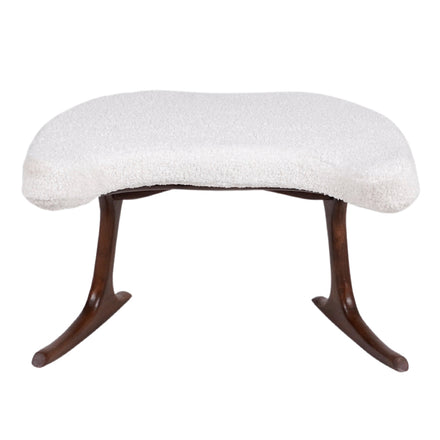
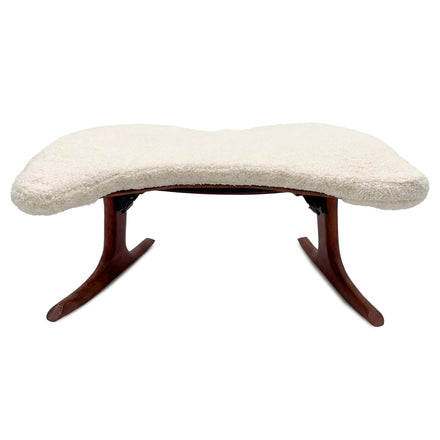
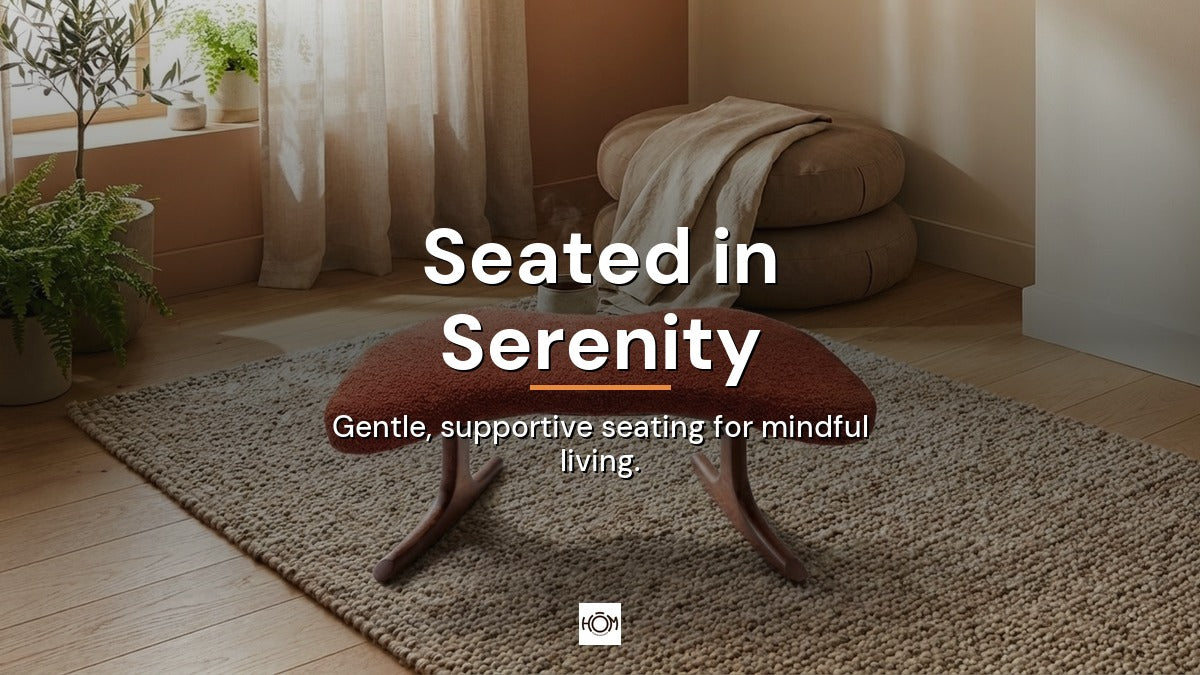
HoM meditation chairs are made around the idea of a gentle lift. Each seat is handcrafted from solid Acacia hardwood with rocking legs, a key feature that allows subtle positioning while keeping the chair grounded.
The 12-inch Bodhi is a permanent seat for home practice and provides the greatest lift. The 9-inch Self Shelf folds flat for travel and storage but sits closer to the floor. Choose based on the height that feels natural and the transition you can manage comfortably—not on the practice you had years ago.
Meditation chairs for seniors FAQ
Are meditation chairs safe for seniors?
They can be appropriate when the seat is stable and the person can get down and up safely. Balance, joint health, and mobility vary, so anyone with fall risk or significant pain should consult a healthcare professional before using low seating.
What seat height is easiest on the knees?
A higher seat generally reduces how deeply the hips and knees must fold, but the ideal height depends on leg length and mobility. Your hips should rest above your knees and your legs should feel supported rather than suspended.
Do I need a meditation chair with a back?
Not always. Supporting pelvic position can help the spine balance upright without a backrest. If you need continuous support, a firm conventional chair or guidance from a physical therapist may be a better fit.
Can I meditate without sitting cross-legged?
Absolutely. You can sit with the legs loosely open, kneel if that is comfortable, use a conventional chair, stand, or practice lying down. Meditation does not require one specific posture.
What if my knees hurt while meditating?
Do not push through sharp or worsening pain. Unfold the legs, add height or support, shorten the session, and seek professional guidance if the discomfort continues.
Whatever you choose, the goal is the same: to make sitting comfortable enough that attention can return to practice.
Explore HoM meditation chairs for comfortable, elevated cross-legged seating.