The Problem Contains the Solution: Why We Designed a Better Meditation Chair
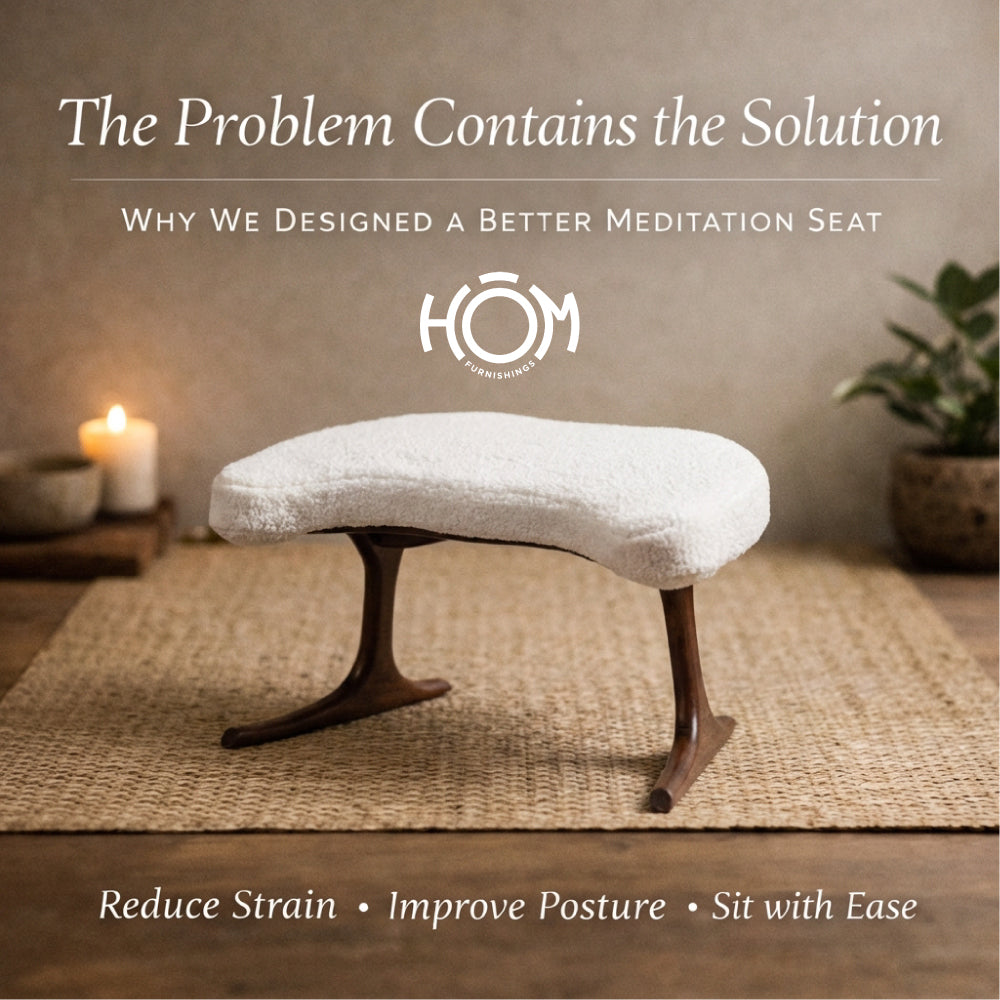
The Problem Contains the Solution: Why We Designed a Better Meditation Seat
Most people learn to meditate on the floor — and for a while, it works. A cushion, a folded blanket, a bolster… whatever is around. But over time, many meditators start to experience knee pain, hip tightness, or discomfort that turns a peaceful practice into something you have to push through.
That’s exactly how this seat began.
This isn’t a product that started with a trend or a marketing plan. It started as a real meditation posture problem — and the belief that discomfort isn’t a virtue. A good meditation seat should support the body so the mind can settle.
In this post, I’ll share the story behind the design, what changed my relationship with sitting meditation, and why the right meditation stool or seat can completely transform your practice.
 The Problem: Floor Meditation Started to Hurt
Like many people, I learned to meditate sitting on the floor.
At first, it felt natural — simple, traditional, even “authentic.” I used cushions, folded blankets, and whatever props I had. But over time, my knees and hips began to ache more and more.
For years, I tried to incorporate the discomfort into the practice.
I told myself it was part of the process. I tried to approach it with a mind-over-matter mentality. I thought maybe the strain was teaching patience.
But eventually, it became obvious:
Discomfort wasn’t deepening the practice — it was shortening it.
 Discomfort Isn’t a Virtue (And Strain Isn’t Meditation)
Meditation asks the body to be still — but not rigid.
It asks for alertness without effort. It asks for a posture that is awake, stable, and relaxed at the same time.
When your body is fighting your seat, you aren’t practicing presence.
You’re practicing endurance.
And while endurance has its place, it’s not what most people come to meditation for.
 The Breakthrough: Learning the 7-Point Posture
Once I accepted that pain wasn’t helping, I started paying closer attention to posture.
Specifically, the small details that most beginners overlook:
-
The tilt of the pelvis
-
The length and natural curve of the spine
-
How weight distributes through the legs
-
The role of groundedness in the lower body
-
The “upright but not stiff” feeling of the torso
-
The quiet stability of the seat
-
The traditional principles of the 7-Point Posture
And I noticed something that changed everything:
When those elements are right, the body almost disappears.
When they’re off, the body dominates the entire experience.
 Why I Couldn’t Meditate in a Chair
Like many people who struggle on the floor, I tried meditating in chairs.
And I really didn’t do well with it.
Chairs often felt like too much structure — or the wrong kind of structure.
They either:
-
encouraged slouching
-
locked the spine into rigidity
-
removed the feeling of being grounded
-
created pressure points
-
or felt mentally “loud” in a way that distracted from practice
I wanted something in between:
More support than the floor, but less confinement than a chair.
Bringing the Design Back to First Principles
As a designer and furniture maker by trade, I couldn’t help but approach this as a design problem.
So I asked a simple question:
What does the body actually need in order to sit well?
The answer wasn’t complicated — but it was specific:
-
Enough height to free the hips
-
But not so much height that you lose groundedness
-
Support that encourages an upright spine
-
Without locking it in place
-
A way to adjust pelvic tilt for individual variation
-
A form that feels stable, quiet, and still
That’s the point where the seat started to design itself.
The Seat Designed Itself (After Many Versions)
In theory, form follows function.
In reality… it took version after version.
I built prototypes, tested them, adjusted them, and gave them to practitioners for feedback. Each one taught me something new — not just about posture, but about how subtle the body’s needs are when it’s trying to be still.
Over time, the design evolved into a set of features that weren’t “extras.” They were necessities.

Key Features That Came Directly From Practice
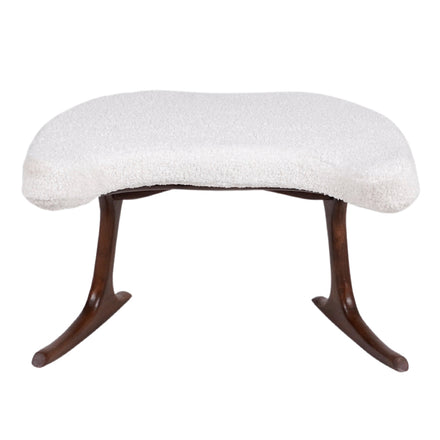
A Contoured Seat Shape
A flat surface doesn’t support the pelvis properly for most bodies.
The contour is designed to help the hips settle, support pelvic alignment, and reduce the constant micro-adjustments that pull you out of meditation.
Curved Rocker Feet
The rocker feet are not about movement.
They’re about stillness.
A subtle curve helps the seat feel grounded and stable, while allowing natural micro-adjustments without forcing the spine to collapse or the hips to lock.
Open Front for Legs and Feet
A huge part of floor discomfort comes from how the legs are forced into position.
By keeping the front open, the seat allows:
-
more leg room
-
more ankle and foot comfort
-
easier transitions into posture
-
less pressure on the knees
When There’s Nothing Left to Add — and Nothing Left to Remove
Eventually, the design reached a point where it felt complete.
Not because it was flashy, but because it was quiet.
Because it stopped calling attention to itself.
The goal wasn’t to make a meditation seat you notice.
The goal was to make a meditation seat that disappears.
Good design in meditation is the same as good posture:
It supports without demanding attention.
Support for the Body. Space for the Mind.
In the end, the seat exists for one purpose:
To support the body so the mind can settle.
Not by forcing posture.
Not by locking you into place.
But by giving you what you need — and then getting out of the way.
The Seat Is Meant to Feel Like the Ground Itself
The best meditation support doesn’t feel like “equipment.”
It feels like the ground.
Stable. Quiet. Reliable.
Something you can trust enough to forget.
That’s what this seat was designed to be.
Frequently Asked Questions About Meditation Seats
Is a meditation seat better than sitting on the floor?
For many people, yes. A meditation seat can reduce knee and hip strain by elevating the hips and improving pelvic alignment, which helps maintain an upright spine with less effort.
What’s the difference between a meditation seat and a meditation chair?
A meditation seat usually supports a grounded posture closer to the floor, often allowing kneeling or cross-legged sitting. A meditation chair typically sits higher and can encourage slouching or reduce groundedness.
Why do my knees hurt when I meditate?
Knee pain is often caused by tight hips or insufficient hip elevation, which places strain on the knees. Raising the hips and improving posture can reduce pressure significantly.
Do I need a meditation cushion if I have a meditation seat?
Not always. Many people find that a properly contoured meditation seat replaces the need for extra cushions, though some practitioners still like a small cushion for personal preference.
What posture is best for meditation?
There’s no single “best” posture for everyone, but most traditions recommend a stable seat, upright spine, relaxed shoulders, and a neutral pelvic tilt — often described through the 7-Point Posture.
Ready to Sit Better?
If your meditation practice is being limited by discomfort, you don’t need to force it.
You need better support.
• Explore our Meditation Chairs
• Learn more about Acacia Wood + Craftsmanship
Explore HoM meditation chairs for comfortable, elevated cross-legged seating.
Shop the collection